AEO · 9 min read · Feb 22, 2026
Getting cited by ChatGPT: the 6-step audit I run for new clients
AI Overviews and ChatGPT citations follow rules. Here's the exact six-step audit checklist that reliably gets brands quoted in answers.
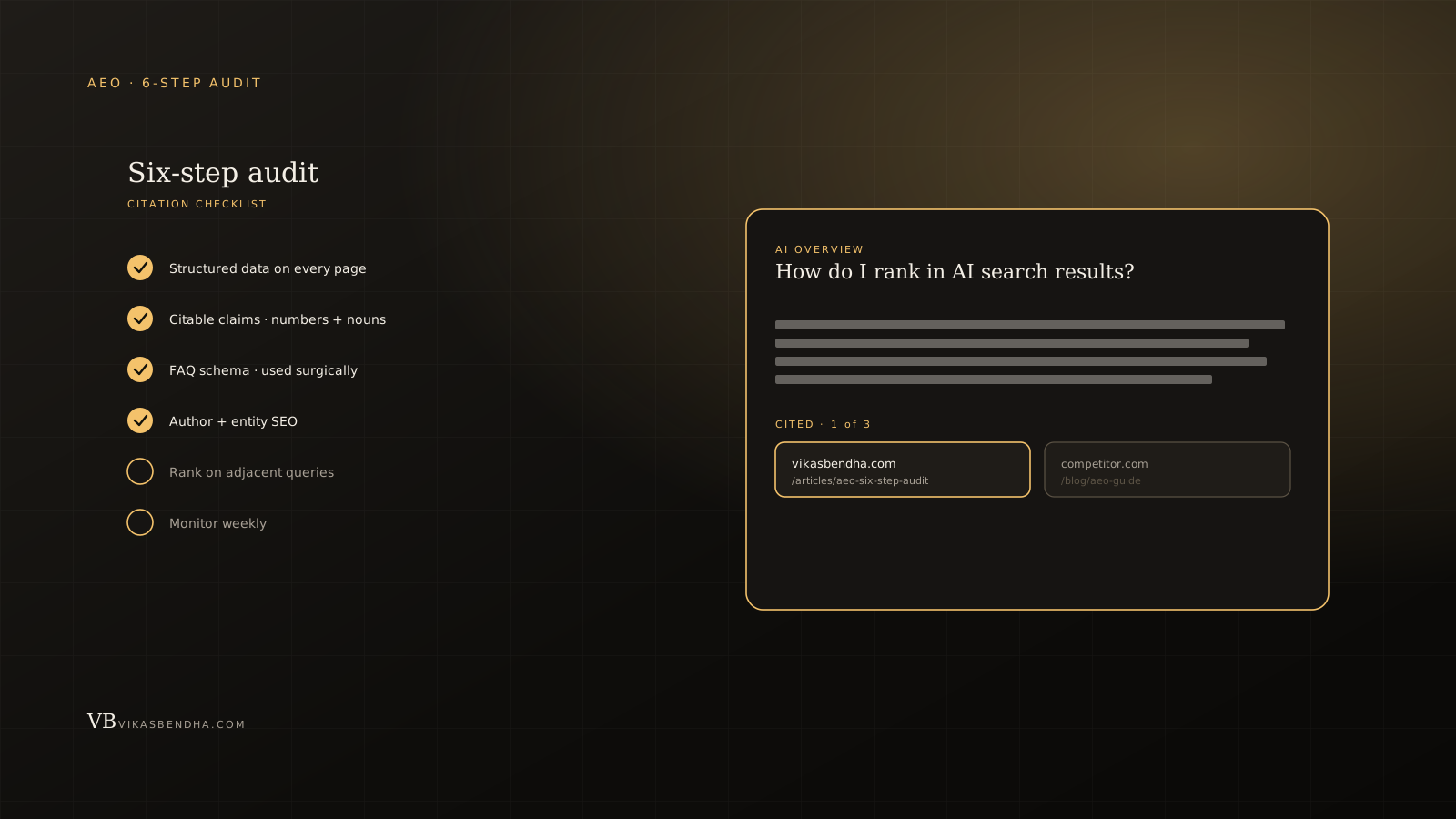
AI search engines decide who to quote with a small set of repeatable rules. They don't always cite the highest-ranked page. They cite the most quotable page that the highest-ranked engines already trust. That distinction is the entire game, and once you understand it the audit below stops feeling like guesswork.
Why citation matters
An AI Overview that cites your domain pulls roughly half of the click-through that the same position used to get pre-AI. Half is worse than full. Zero is much worse than half. Brands that don't show up in the answer at all aren't competing for fifth place; they're invisible to the entire upper-funnel of buyers who now ask a chatbot before opening a search tab.
Step 1 — structured data on every meaningful page
Article, BreadcrumbList, FAQPage, HowTo, Organization, Person, Product, ProfessionalService — each on the page where it semantically belongs. Most sites I audit ship one or two of these and miss the others. The full Schema.org spec is freely published; the work is implementation, not research. Validate every page against Google's Rich Results Test before you call it done.
Step 2 — citable claims with numbers and nouns
Models prefer to quote a sentence that contains a measurable claim. "Click-through fell roughly forty percent year-over-year on informational queries" is far more quotable than "clicks dropped a lot." Audit your top pages for vague claims and rewrite them with concrete data points where you can defend them. Where you can't, drop the claim instead of softening it — soft claims dilute the citable parts of the page.
Step 3 — FAQ schema, used surgically
FAQPage markup is over-used as keyword stuffing and under-used as actual citation surface. Done right, an FAQ block answers the three to five questions a buyer asks just before they buy. Each question is short, unambiguous, and answered in one or two sentences with a fact in it. AI Overviews routinely lift the answer verbatim. Done wrong, the FAQ is a list of search-volume questions with paragraphs that no one would quote.
Step 4 — author and entity SEO
Pages attributed to a named human, with sameAs links to LinkedIn, Wikipedia, or X profiles, get cited more often than the same content under a generic company byline. Build out a Person schema on every author page, link it to your Organization schema, and make sure the same author shows up on Google Knowledge Panel signals where applicable. Author entity is one of the cheapest moves in AEO and one of the most under-shipped.
Step 5 — rank on adjacent queries the AI engines actually pull from
AI search engines pull citations from multiple ranked sources, not just position one. That means ranking in the top ten on a cluster of related queries gets you cited more often than ranking number one on a single query. Map each pillar topic to fifteen to thirty supporting subtopics. Rank reasonably on most of them. The cumulative effect is much higher citation share than a single trophy keyword.
Step 6 — monitoring, manual at first
Until tooling matures, citation monitoring is a manual ritual. Once a week, ask Perplexity, ChatGPT, and Gemini your top five buyer questions. Note who's cited. Track over time in a tiny spreadsheet. The patterns become obvious by week three — what you've shipped is helping or what's missing — and the prioritization of the next quarter's content writes itself.
The honest part
This audit gets results, but the timeline is slow. Most brands see meaningful citation lift inside ninety days. Some take six months because the engines need to recrawl and reweight your authority. Don't promise instant results — promise structural ones. The companion piece on the post-Overviews search landscape is Your traffic is down. Your rankings aren't.. The full service is AI visibility (AEO / GEO).
Sources & further reading